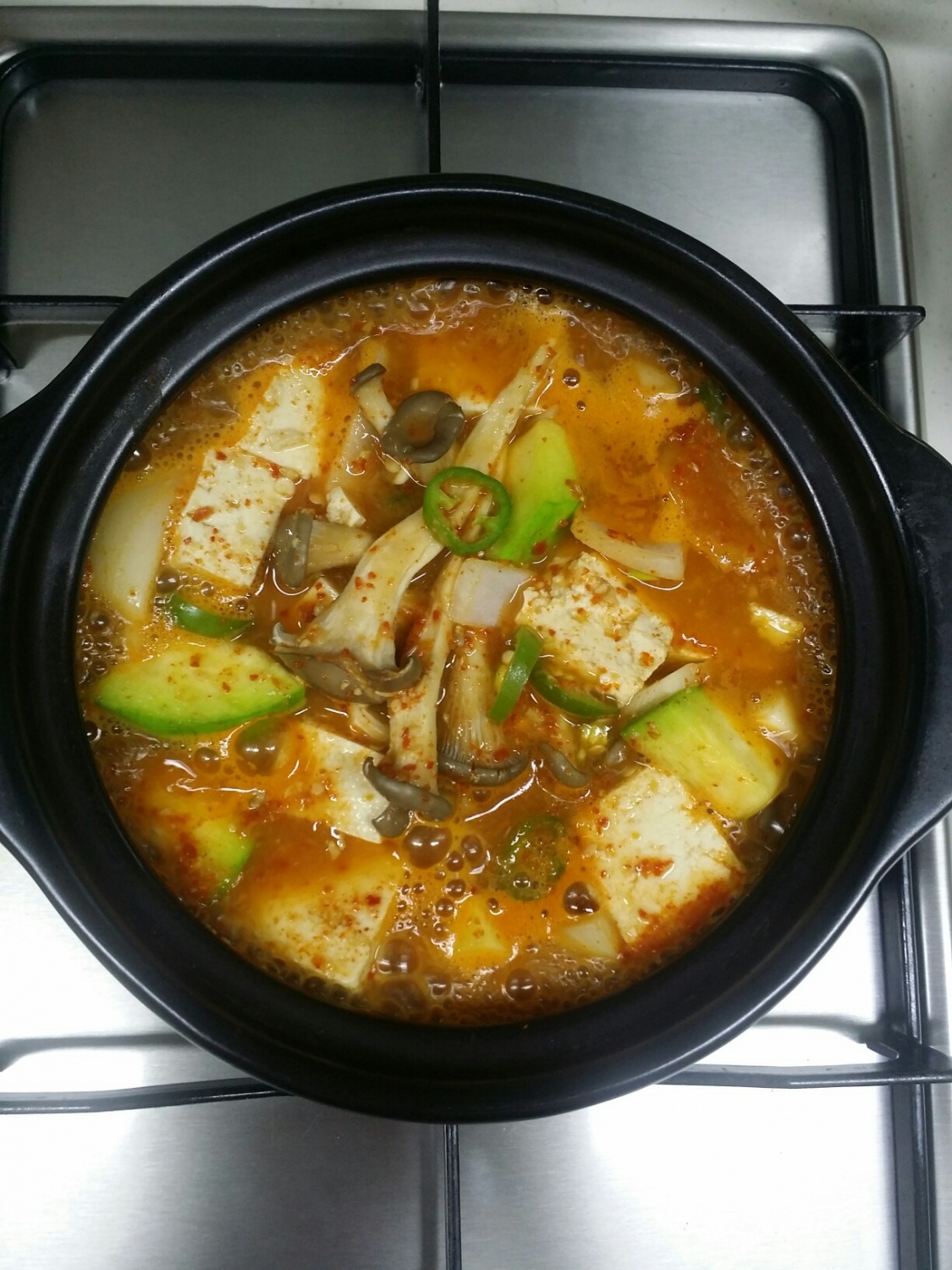
If you’re in the mood for a rich and comforting Korean dish, Beef Doenjang-jjigae (소고기 된장찌개) is a perfect choice. This variation of Korea’s classic soybean paste stew brings together tender beef, savory fermented paste, and hearty vegetables—all in one delicious pot.
What is Doenjang-jjigae?
Doenjang-jjigae is a traditional Korean stew made with doenjang (fermented soybean paste). It’s a staple of Korean home cooking, known for its deep umami flavor and warming qualities. Adding beef makes it extra satisfying and ideal for a full meal.
Ingredients (2–3 servings)
-
150g (5 oz) beef brisket or stew meat, sliced
-
2 tbsp Korean doenjang (soybean paste)
-
2½ cups water or anchovy-kelp broth
-
½ onion (sliced)
-
½ zucchini (sliced)
-
½ potato or radish (chopped)
-
½ block tofu (cubed)
-
1 green chili or hot pepper (optional)
-
1 garlic clove (minced)
-
1 scallion (sliced)
-
Sesame oil (1 tsp, optional for beef)
-
Black pepper to taste
Cooking Instructions
-
Sauté the beef: In a pot, lightly sauté the sliced beef with a bit of sesame oil until browned. This adds flavor to the base of the stew.
-
Add water or broth: Pour in your broth or water and bring it to a boil. Simmer for 10 minutes so the beef softens.
-
Mix in doenjang: Dissolve the soybean paste in a ladle with hot broth, then stir it back into the pot.
-
Add vegetables: First add potato or radish, then onion, zucchini, and tofu. Let it simmer another 7–10 minutes until everything is tender.
-
Finish with aromatics: Add minced garlic, chopped scallions, and optional chili. Simmer for 1–2 more minutes.
Tips for Success
-
Use brisket or shank cuts for tenderness.
-
For richer flavor, use anchovy-kelp broth instead of plain water.
-
Adjust the saltiness by adding more broth or water near the end if needed.
How to Serve
Beef Doenjang-jjigae is best served bubbling hot, with freshly steamed white rice and traditional Korean side dishes (banchan). It’s not just a meal—it’s comfort in a bowl, perfect for cold days or when you’re craving something deeply savory.
댓글 남기기