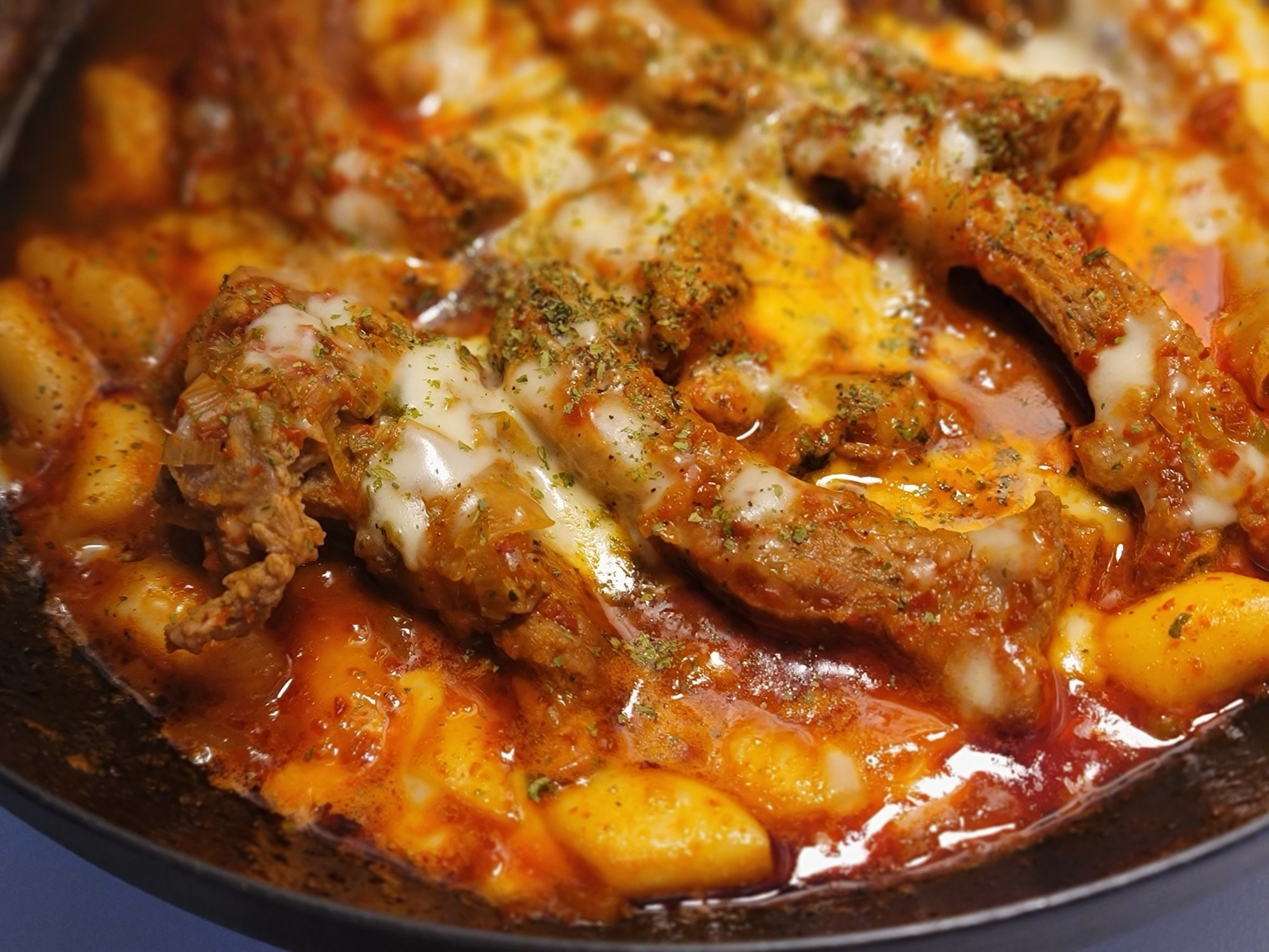
If you’d like to introduce a richly flavorful Korean dish to your international blog readers, here’s a detailed blog‑style post for Spicy Cheese Back‑Rib Stew (매콤한 치즈 등갈비찜) — a sumptuous fusion of hearty pork back ribs, fiery seasoning and melty cheese.
🍖 Why this dish shines
-
Back ribs (등갈비) are prized in Korean cooking for their tender texture and rich flavour.
-
The spicy seasoning adds a bold kick, which many international readers will find exciting.
-
Adding cheese gives a trendy, indulgent twist — it appeals to both Korean‑food lovers and those who love fusion comfort food.
-
It’s a communal, shareable dish — perfect for gatherings, parties, or cozy meals.
-
Through this post, you’re introducing readers not only to a recipe but to a cultural moment: enjoying fun, hearty Korean food.
🛒 Ingredients (for about 4 servings)
Here’s a guideline you can convert to cups/ounces depending on audience preference.
-
Pork back‑ribs (등갈비) ~ 1.5 kg (≈ 3.3 lbs)
-
Water + aromatics for blanching/initial cooking:
-
Water (enough to cover ribs)
-
Fresh ginger slice (≈ ½ tsp minced)
-
Whole peppercorns (e.g. ~½ tsp)
-
Optional: a little cola or soda can sometimes be used to help tenderize and sweeten slightly.
-
-
Vegetables:
-
Onion (1 medium)
-
Carrot (½)
-
Large green onion (½)
-
Optional: mushrooms, potato, etc.
-
-
Spicy seasoning base:
-
Korean red pepper powder (고춧가루) ~ 1–2 Tbsp (adjust for heat)
-
Soy sauce (진간장) ~ ½–1 cup (depending on amount)
-
Sugar / or a sweetener (설탕) ~ 2–3 Tbsp
-
Mirin or Korean cooking wine (맛술) ~ 2‑4 Tbsp
-
Minced garlic ~ 1‑2 Tbsp
-
Optional: oyster sauce (굴소스) 1 Tbsp, for umami.
-
Water/broth ~ 2‑3 cups to help simmer.
-
-
Cheese topping:
-
Mozzarella or a cheese that melts well, ~150‑200 g (5‑7 oz)
-
-
Garnish: chopped green onion, sesame seeds, maybe fresh chilli slices if you like extra heat.
👩🍳 Step‑by‑Step Preparation
-
Prepare the ribs
-
Remove excess fat, rinse ribs under cold water.
-
Optional: soak in cold water for ~30 mins to draw out impurities.
-
Blanch the ribs: in a large pot, bring water + ginger + peppercorns (and optionally a splash of cola or soju) to a boil, add ribs and simmer for ~10–15 mins, then drain and rinse. This helps remove excess blood and unpleasant smell.
-
-
Make the seasoning/stewing sauce
-
In a bowl, mix together soy sauce, sugar, cooking wine, garlic, red pepper powder, oyster sauce, and some water/broth until well combined.
-
Adjust the amount of red pepper powder depending on how spicy you want it.
-
You can also blend half an onion + half a green onion + a touch of fresh ginger for extra flavour.
-
-
Simmer the ribs
-
Return the blanched ribs to the pot. Pour in the sauce, add onions, carrots, and other vegetables you like.
-
Bring to a boil, then reduce to medium/low heat, cover and simmer ~30‑40 mins until the meat is tender and the sauce has reduced somewhat and stuck to the ribs. For example, a version using 1 L water and other ingredients took about 1 hour 40 mins for 4 servings.
-
Check and spoon sauce over the ribs occasionally so the flavour is absorbed evenly.
-
-
Final touches and cheese topping
-
When the ribs are tender and sauce is thick, turn off the heat.
-
Transfer ribs into an oven‑safe or heat‑proof pan (if your stovetop pot isn’t oven‑safe).
-
Sprinkle the shredded mozzarella (or your chosen melting cheese) evenly over the top.
-
If using an oven or broiler: put under the grill for a few minutes until the cheese is bubbly and golden. If you don’t have oven access, cover the pot with a lid off‑heat and let the residual heat melt the cheese, though it may not brown as much.
-
Garnish with sesame seeds, chopped green onion and optionally fresh chillies.
-
-
Serve
-
Serve hot. Encourage your guests to pull apart the ribs, dip into the sauce, and savour the combination of tender meat + spicy sauce + molten cheese.
-
Pair with steamed rice (밥) and maybe a simple vegetable side or kimchi to balance.
-
🌍 Cultural Notes for Your International Readers
-
In Korea, back‑ribs dishes like this are often shared among friends/family, especially at gatherings or when people want to “feast”.
-
The combination of spicy + sweet/ savoury soy‑based sauce + cheese reflects how Korean cuisine often blends strong and comforting flavours.
-
Using cheese is a relatively modern twist (fusion/slight Korean Western‑style) but very popular in Korean “chimaek” (치맥 – chicken + beer) or BBQ scenes. So your audience gets both traditional meat preparation and a trendy twist.
-
You can mention that pulling meat off the bone, dipping into sauce, then enjoying with melted cheese creates an interactive, fun dining experience — perfect for social meals.
-
Encourage trying adjustable heat: if they’re not used to spicy food, start with less red‑pepper powder and maybe include a mild cheese.
🔧 Tips & Variations
-
Heat level adjustment: Use less 고춧가루 (red pepper powder) or substitute some with paprika for a milder heat; you can also reduce/add chilli flakes or fresh chopped chillies.
-
Vegetables: You can add mushrooms (shiitake, enoki), potatoes, or even sweet potato to soak up sauce.
-
Cheese variations: Cheddar, provolone or a mix of mozzarella + cheddar could be used depending on taste and availability.
-
Make‑ahead: You can prepare the ribs till step 3 ahead of time, refrigerate, and then when ready to serve, reheat, add cheese and finish.
-
Serving style: For an international audience, you might serve this with a side salad or steamed vegetables rather than just rice, to make it more balanced.
-
Dietary note: If someone doesn’t eat pork, you could experiment with beef back‑ribs or even chicken (though taste & cooking time differ). Also, if dairy‑free, omit cheese and maybe finish with roasted sesame + seaweed flakes for texture.
댓글 남기기